







How Texas Checks Its Election Equipment
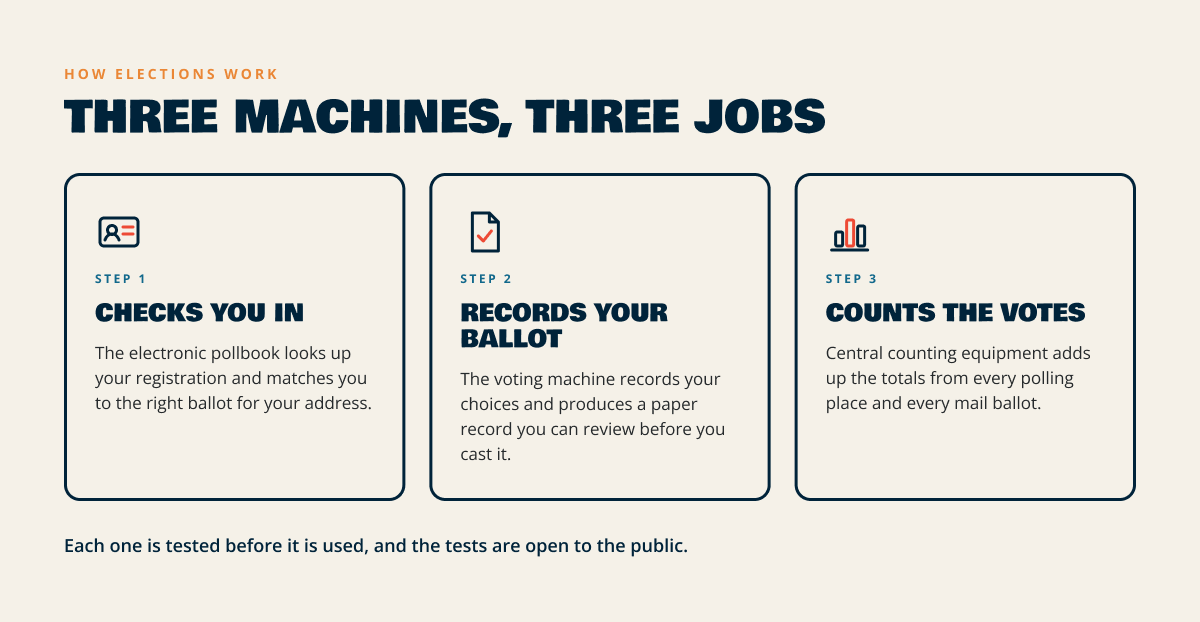
There’s the device that checks you in, the equipment you use to mark or cast your ballot, and the systems that count the votes. Each has a different job.
Testing starts with the basics. Election workers check that the equipment’s parts work, including screens, printers, and other components. They also check how the equipment records choices, counts ballots, and runs its software. These checks happen at different points in the election process.
The first check happens on the systems that check voters in. Electronic pollbooks are the devices election workers use to look up your registration, check you in, and match your ballot to your address. They’re separate from the equipment used to cast and count votes.
At least 48 hours before early voting begins, election officials test that:
- Voter information is loaded correctly
- The equipment works
- Voters are assigned the correct ballot for their address
- Any ballots issued by the system can be read by the voting equipment
Verify Voting Equipment Counts & Records Choices Correctly
Before voting begins, election workers conduct a logic and accuracy test using ballots with known results. They compare the equipment’s count with the expected total.
The numbers must match exactly. If they don’t, officials must resolve the problem and test again before the equipment can be used.
The test includes people and public oversight:
- At least two people serve on the testing board. Officials must make reasonable efforts to include someone from each political party that holds a primary.
- You can watch. Your county must post notice at least 48 hours before the public test so people can attend.
Ensure Voting Software Matches the Certified Version
Texas has specific requirements for voting system software:
- Voting machines stay offline. Texas voting systems cannot connect to the internet or other external communications networks.
- Software must be certified. Only necessary software certified by the Texas Secretary of State is loaded onto voting equipment.
Officials also check the software using a digital fingerprint called a “hash.” As part of logic and accuracy testing, they compare hashes from a sample of voting machines with the info provided by the Texas Secretary of State or the U.S. Election Assistance Commission.
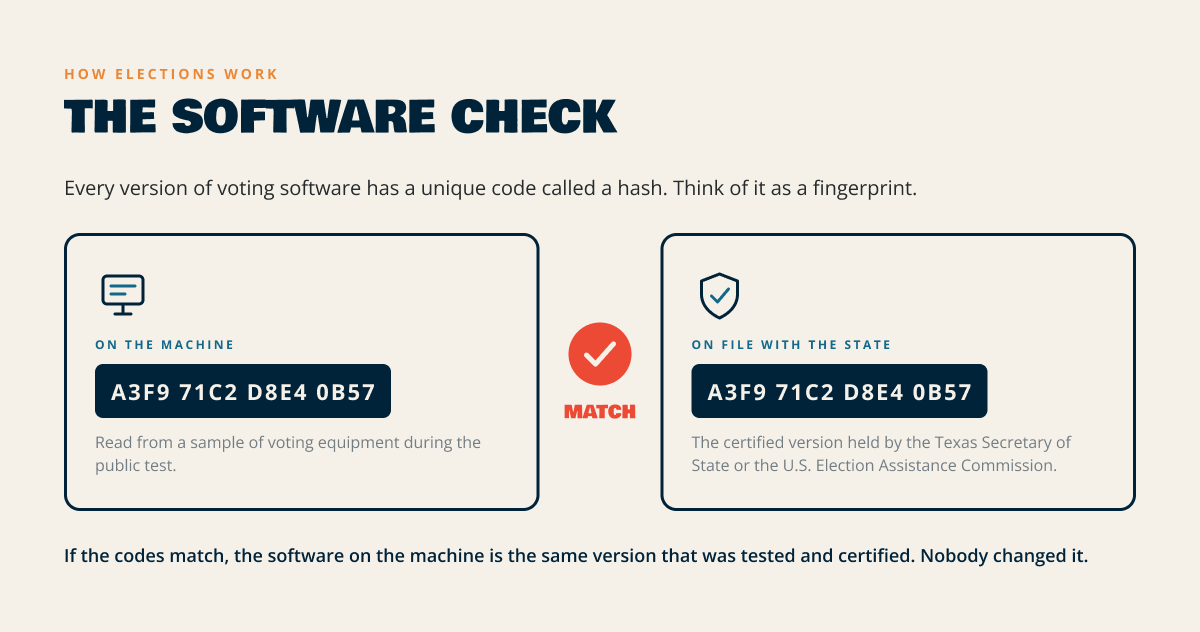
A match confirms that the software checked is the same version that was tested and certified.
Test Counting Equipment Before and After Use
A “central counting station” is a location where election workers in each county count ballots, combine vote totals, and prepare election results. The setup depends on the voting system and how the election is conducted.
Central counting equipment goes through an initial public test, followed by two more checks at key times:
- Immediately before counting begins. Officials use electronic test records with known results to check that the equipment produces the expected totals.
- Immediately after counting is complete. Officials test the equipment again using the electronic test records from the first test.
Testing at both stages provides another check that the equipment is producing the expected results at every stage.
Keeping Track of Election Equipment
Election officials keep records called the chain of custody to keep track of where voting equipment is stored, who moves it, and who uses it. They also track items like memory cards that store election information.
Here’s what that looks like:
- Two people check each handoff. When equipment or memory cards move from one person’s care to another’s, at least two people must check and verify the handoff.
- Using a key or password requires a witness. When an authorized person uses a key or password to access voting equipment, another authorized person must witness it. That access is written down in a record.
- Seals help show whether equipment has been opened. There are physical seals placed on the equipment. Workers record which seal is on each machine. If a seal is removed with permission, they record who removed it and why.
These records help officials follow the equipment’s path through the election, including who handled it and when.


