







Meet the People at the Polls
When you walk into a polling place, you’ll see the people checking voters in and helping them use the equipment. You may also notice someone wearing a “Poll Watcher” badge or an election inspector observing the process.
These people have different responsibilities. Knowing who does what can make your visit easier to understand.
For the second post in our “How Texas Elections Work” series, let’s meet the people involved.
Election Workers Manage the Polling Place
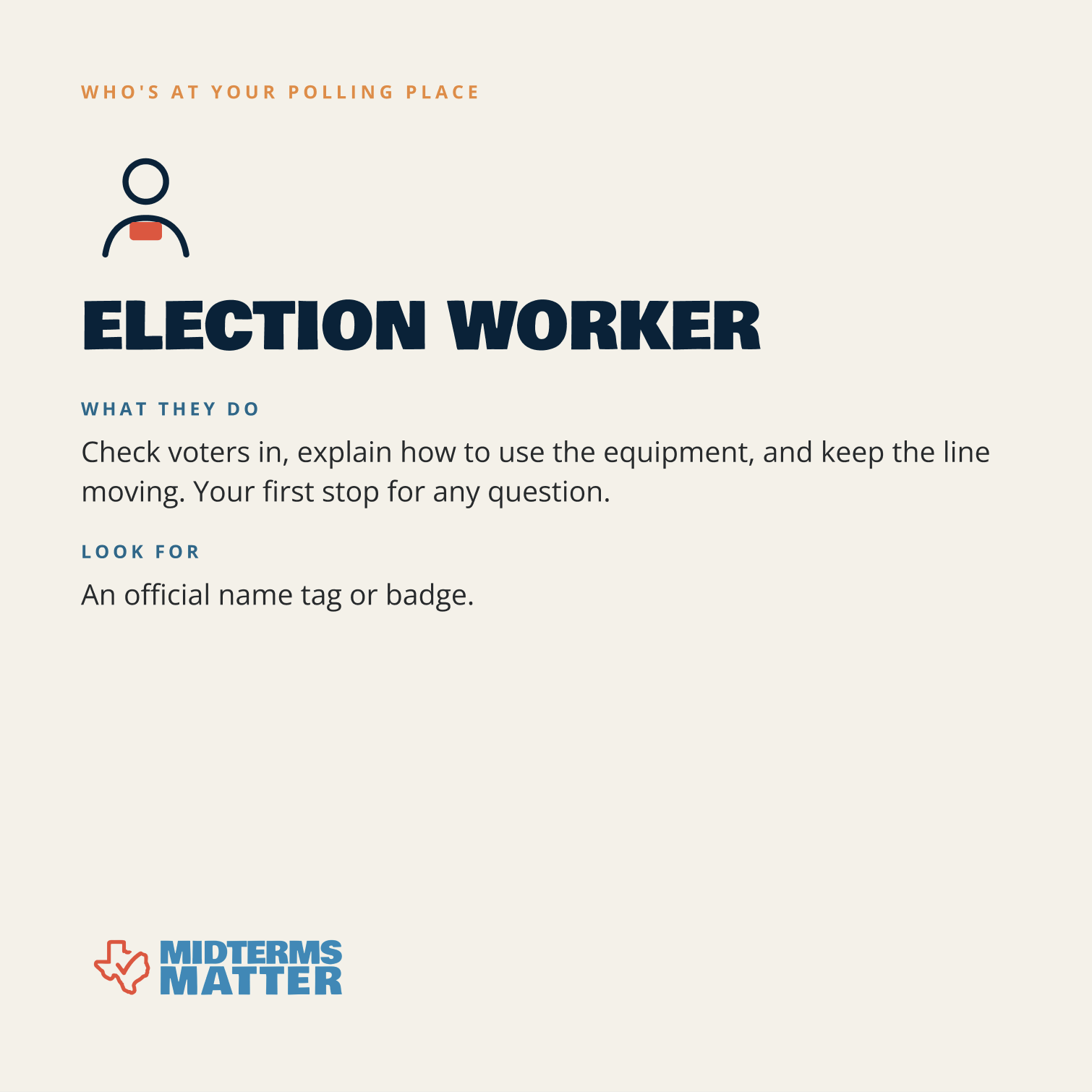
Election workers check voters in, explain how to use the equipment, and help keep voting moving.
The person responsible for managing an Election Day polling place is called the presiding election judge. Despite the title, this person doesn’t have to be a courtroom judge. It’s an election role.
If you have a question about the voting process, start with an election worker. If it needs more attention, ask to speak with the election judge.
Poll Watchers Observe the Process
In Texas, a poll watcher is someone officially appointed to observe an election on behalf of a candidate, political party, or a group supporting or opposing a ballot measure.
Before serving, poll watchers must complete state training and present their appointment and training certificates. They also take an oath not to disrupt voting or harass voters.
Their job is to observe election activities and bring concerns to election officials. Election workers remain responsible for running the polling place.
What Poll Watchers Can See
At the location where they are appointed, poll watchers may observe activities such as:
- Election workers checking voters in
- Officials inspecting and securing voting equipment
- Ballots being processed and counted
- Election materials being secured and transported
Watchers must be allowed to see and hear the activities they are authorized to observe, even after the polls close. Poll watchers must wear a badge identifying their role, provided by an election official.
Your Ballot Still Has Privacy Rules
Being a poll watcher doesn’t give someone permission to look over your shoulder while you vote. They can’t see you marking your ballot or receiving help from a person you chose.
There is a specific exception: watchers may observe assistance provided by election workers, including checking that the ballot reflects the voter’s stated choices.
While serving, poll watchers also can’t:
- Talk with voters or communicate with them about the election
- Photograph or record voting activity
- Harass voters or disrupt the process
If a watcher has a concern, they bring it to an election official.

State Inspectors Have a Different Role
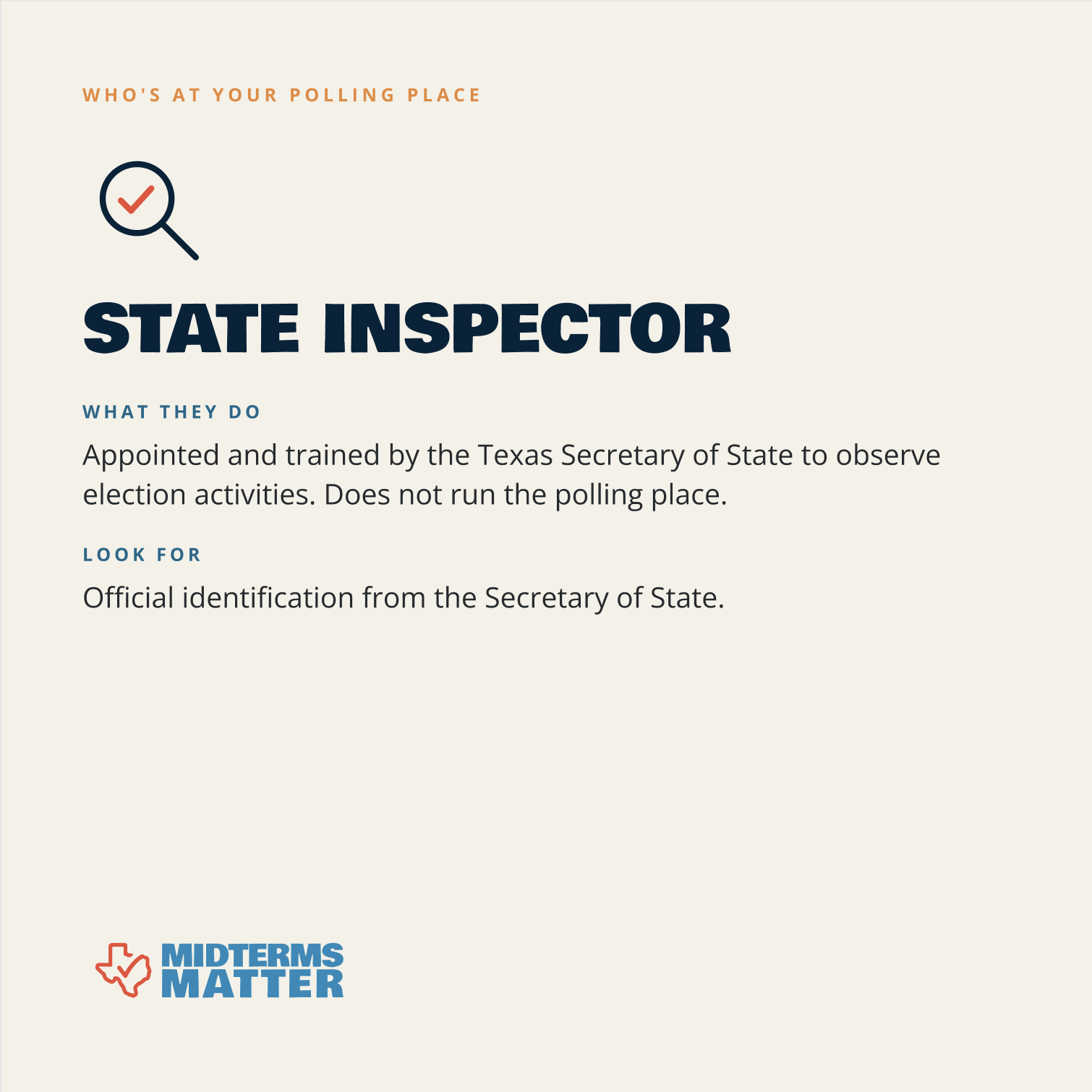
You may also see a state election inspector. This person is appointed and trained by the Texas Secretary of State to observe election activities. State inspectors and poll watchers have different appointments and responsibilities. Neither takes over the election workers’ job of running the polling place.
Who Is Responsible for Keeping Order?
The election judge or early voting clerk has authority to maintain order. They may appoint a special peace officer, or an official person assigned to help keep order at that polling place.
What About Armed Guards or Police Officers?
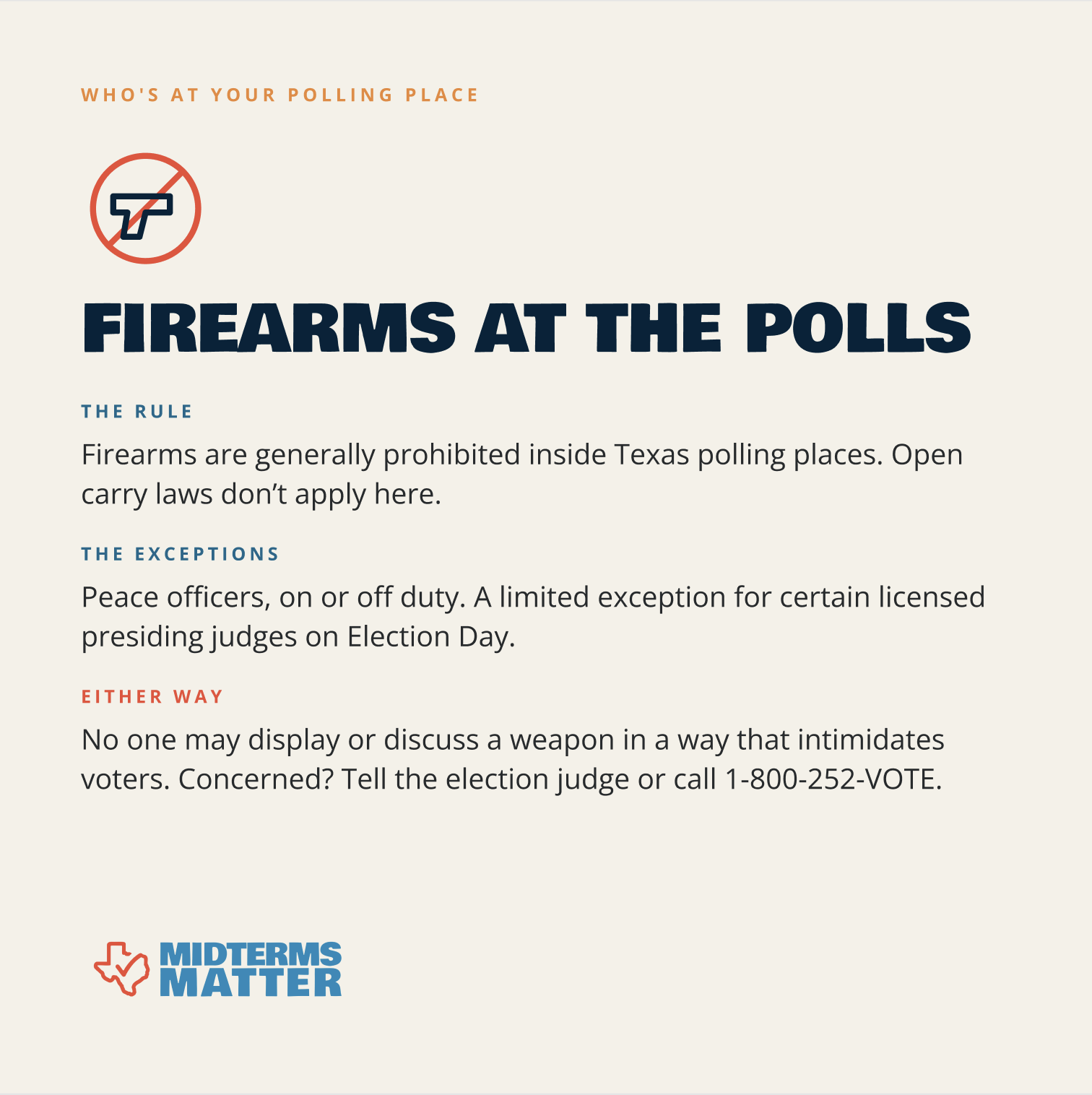
Texas generally prohibits firearms inside polling places. The state’s open-carry laws don’t give voters or poll watchers permission to bring a handgun inside.
There are legal exceptions. Peace officers, such as police officers and sheriff’s deputies, are exempt from the general prohibition whether they are on or off duty.
The Secretary of State also recognizes a limited exception for certain presiding election judges who have a handgun license and are serving on Election Day. The location and circumstances matter. Even when carrying is permitted, officials must not display or discuss a weapon in a way that intimidates voters.


